
What Makes a Door Energy Efficient? Your Guide to a Warmer Kent Home
In the beautiful county of Kent, as the seasons change, the focus on keeping our homes cosy and our energy bills manageable becomes paramount. One key area often overlooked is the front door. It’s more than just an entrance; it’s a crucial barrier against the elements. So, what makes a door energy efficient, and how can you ensure your home isn’t losing precious heat through a draughty, outdated entryway?
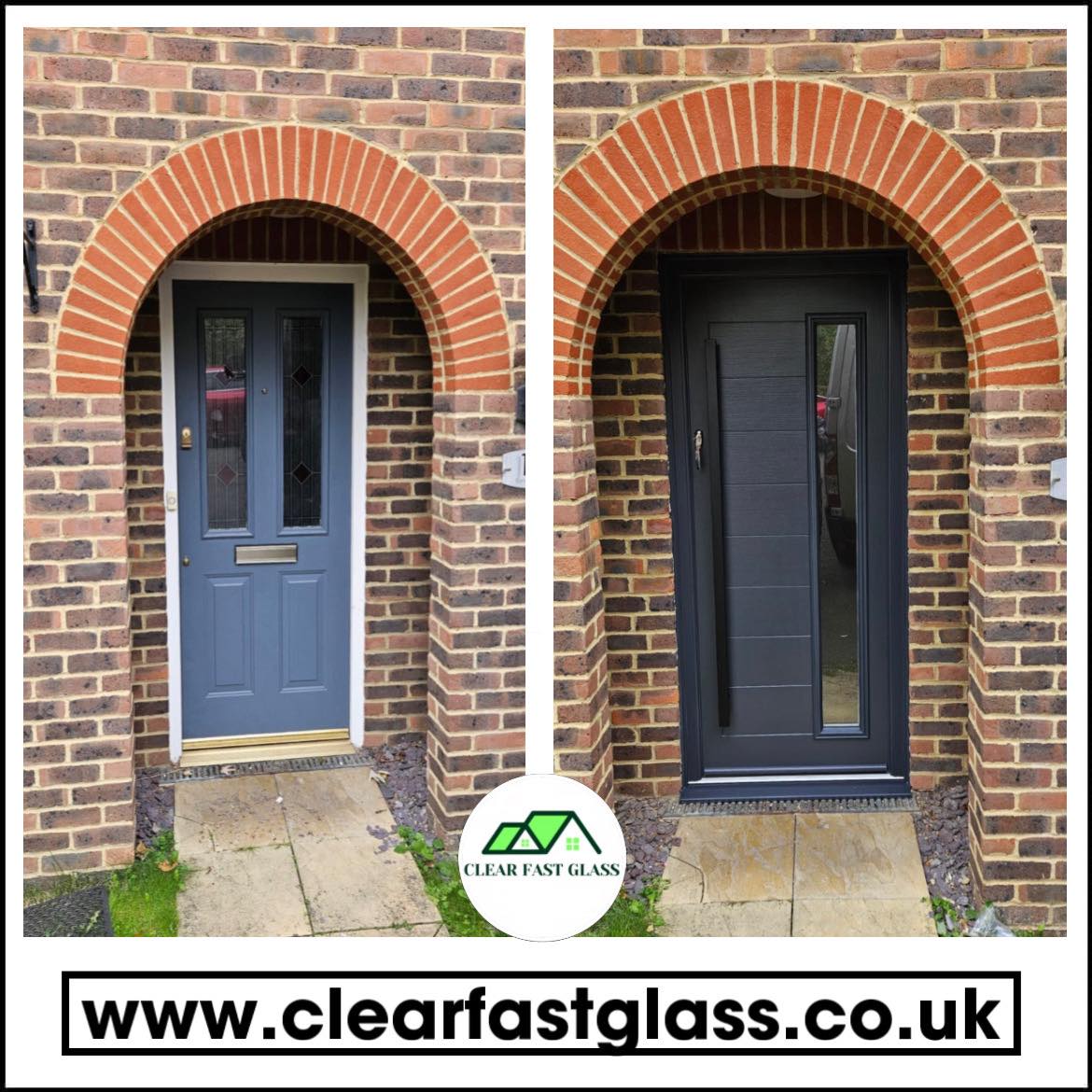
At Clear Fast Glass, your trusted, family-run windows and doors business with over 20 years of expertise, we specialise in providing value-for-money solutions that dramatically improve your home’s energy efficiency, security, and aesthetics. We’ve seen firsthand the stunning transformation a switch to a high-performance door, like a High Security Thermal Efficient Composite Door, can achieve.
The Key to Efficiency: Understanding U-Values and DERs
When asking what makes a door energy efficient, the answer lies in a few technical but vital measurements. The most important is the U-value.
- U-Value (Thermal Transmittance): This figure measures how quickly heat is lost through a material. Crucially, a lower U-value indicates better insulation. For example, current UK Building Regulations require new and replacement doors to meet or exceed a U-value of $1.4 \text{ W/m}^2\text{K}$. High-performance doors, such as the ones we install, often achieve significantly lower U-values, meaning superior heat retention.
- Door Energy Ratings (DERs): Like the labels on a fridge or washing machine, the British Fenestration Rating Council (BFRC) provides a traffic-light style rating system from A++ (most efficient) to G (least efficient). This rating considers the U-value, but also factors in solar gain (how much free heat the sun provides) and air leakage. Looking for an ‘A’ or ‘B’ rated door is a simple way to answer the question, what makes a door energy efficient.
Material Matters: The Best Choices for Insulation
The materials used in the door’s construction are fundamental to its thermal performance. Different materials offer varying levels of natural insulation and design advantages.
Composite Doors: The Modern All-Rounder
When considering what makes a door energy efficient, composite doors often come out on top. They are constructed from multiple materials, including a solid insulating core, which is typically a dense foam or timber surrounded by durable GRP (Glass Reinforced Plastic) or uPVC skins.
- Superior Insulation: The solid, thick core prevents thermal bridging, making them exceptional at retaining heat. Our high-security composite doors offer unmatched thermal efficiency alongside outstanding security.
- Durability and Low Maintenance: They won’t warp, crack, or twist like some older timber doors, ensuring a consistently tight, draught-proof seal for years to come.
uPVC Doors: Practical and Efficient
Our uPVC front doors are another popular choice, offering a great balance of affordability and performance. Modern uPVC designs feature multi-chambered frames that trap air, acting as an insulating barrier to slow heat transfer.
Aluminium Doors: Combining Style with Performance
While aluminium is naturally conductive, high-quality modern aluminium doors utilise thermal break technology. This involves a non-metallic, insulating strip inserted into the frame to separate the inner and outer surfaces, dramatically reducing heat loss and allowing these stylish doors to achieve enviable energy ratings.
Stopping Draughts: The Importance of a Tight Seal
Even the most well-insulated door panel will fail to be energy-efficient if it doesn’t fit correctly or is prone to draughts. This is where air leakage comes in.
- High-Quality Seals: A genuinely energy-efficient door features advanced seals, weatherstripping, and gaskets around the frame and threshold. These components compress when the door is closed, creating an airtight barrier that stops cold air from infiltrating your home and prevents warm air from escaping.
- Precision Installation: A new door is only as good as its fitting. Our 20+ years of expertise at Clear Fast Glass ensures every door is installed with precision, guaranteeing a perfect, airtight fit and optimal thermal performance. Even the best door won’t meet its potential if it’s poorly hung, which is why professional installation is the final answer to what makes a door energy efficient.
Glazing and Finishing Touches
If your door includes glazed panels, the type of glass is crucial.
- Double or Triple Glazing: Any glazed element should feature double or, for the highest efficiency, triple glazing. The space between the panes, often filled with an inert gas like Argon, creates another layer of insulation, significantly reducing heat loss.
- Letterboxes and Keyholes: Small details make a difference. Energy-efficient doors include design features like internal brushes or flaps on letterboxes and keyhole covers to minimise air leakage through these small openings.
Enhance Your Home with Clear Fast Glass
Upgrading your external doors to energy-efficient models is one of the smartest investments a homeowner can make. Not only will you enjoy a warmer, more comfortable home in Thanet and across Kent, but you will also see a reduction in your heating bills and increase your property’s value.
If you’re ready to stop asking what makes a door energy efficient and start enjoying the benefits of one, contact Clear Fast Glass today. We’ll help you choose the perfect high-quality uPVC, Composite, or Aluminium door to bring security, aesthetics, and superior thermal performance to your home.

